AI lie detector: face and voice analysis, explained
MyTruthTeller answers three timed questions with your camera and microphone, then layers AI review of what you said on top of movement and voice signals. Here is exactly what it looks at.
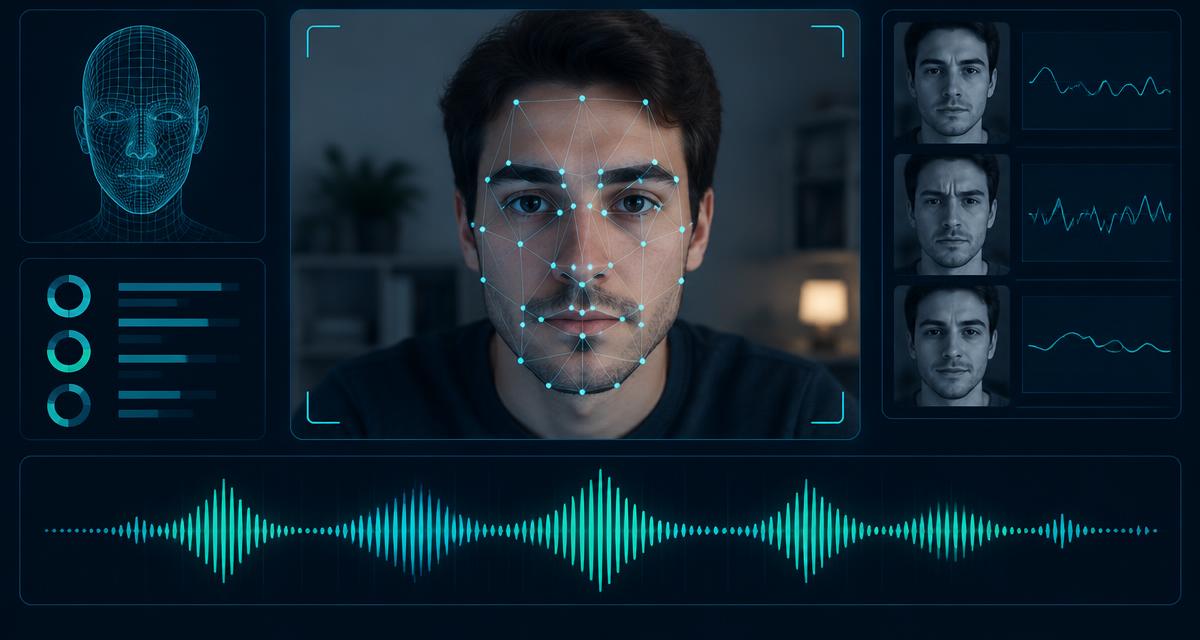
Five steps, every answer
1. Dialogue and emotion analysis
Your spoken answer is transcribed in the browser, then an AI model reviews it for logic, consistency, evasion, contradictions, and emotional stress. A smooth, sensible answer is treated as neutral — not automatic proof of truth.
2. Facial movement and eye signals
The camera feed is read locally to estimate head and facial motion, gaze shifts, and blink rate. Each reading is compared with your own calmest moments in the same session rather than a one-size-fits-all rule.
3. Voice signals
The microphone feed is measured for response delay, pauses, hesitation, pitch strain, and tremor. Loud or quiet speaking alone is not counted against you.
4. Truthful and deceptive example comparison
An AI model compares the combined pattern against general knowledge of both truthful and deceptive speech, so the comparison does not lean only one way.
5. Final AI verdict
All layers are weighed together for each answer. Results stay hidden until every layer has finished, then you see a truth/deception score and confidence for each question.
Your video and audio stay on your device
Camera and microphone signals are measured in your browser and are not recorded or uploaded. Only the text transcript and numeric readings are sent for AI analysis, and the camera and microphone are released as soon as the last question ends.
An AI lie detector is entertainment, not evidence
No camera, microphone, or AI system can reliably detect lies. Stress, nerves, culture, and neurodiversity all affect behavior. Treat every verdict as a party game, never as proof about a real person. Read our signs of lying guide to see what research actually shows.